Origin (2)
Freedom — half of it lies in our own hearts. To be content living the life of an ordinary person, drifting along with the current, is also a kind of happiness. — Reardon May
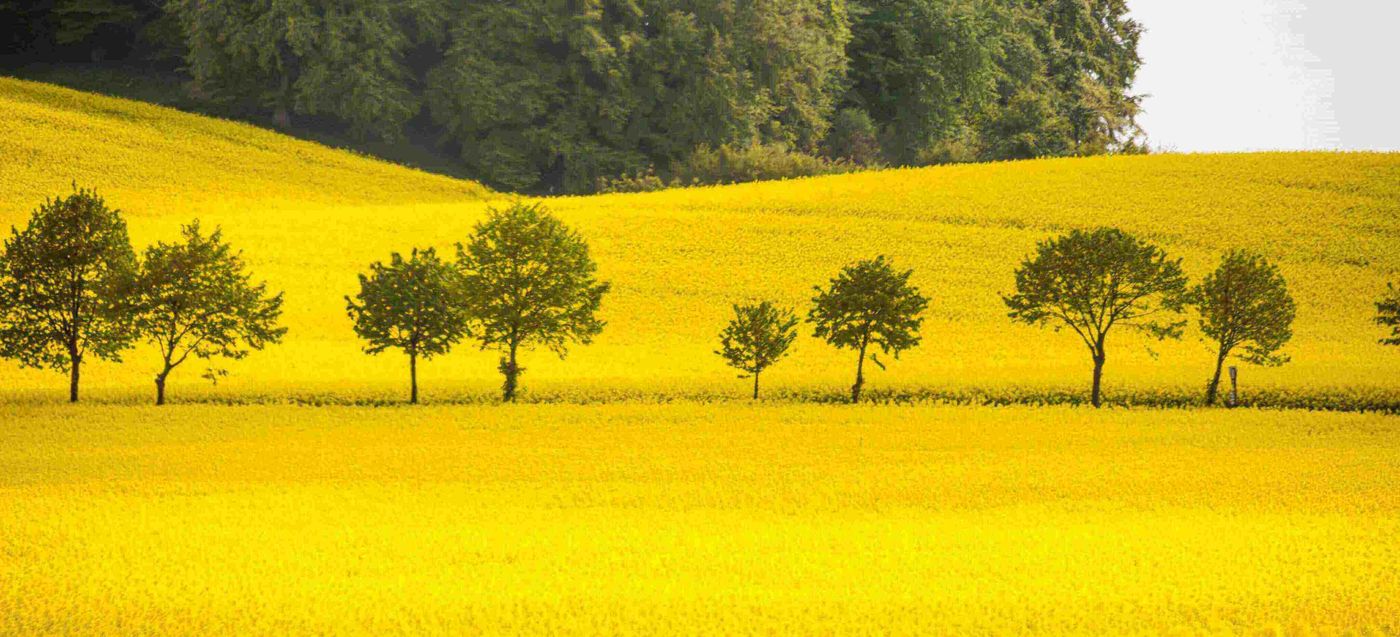
Stepping out the door, across a patch of open ground, there were two straight ridges of farmland stretching to another row of houses, a good 500 meters long. The nearer fields were planted full of tomatoes, eggplants, and cucumbers. A little farther on were cabbages, corn, and peas. Those two ridges of farmland filled all of my grandmother’s later years. Although her legs were no longer nimble, this was the work she had known ever since she took up the burden of life; going down to work the fields was nothing less than a performance, manifesting the fact that she still existed.
Only later did I realize that whenever there were many people around, Grandmother rarely spoke anymore. She would always sit quietly in a corner, leaning to one side, listening to everyone either laughing uproariously or chattering noisily.
At what moment, exactly, does a person suddenly realize that they are no longer the object that life watches, and thereafter go on existing quietly, with a blurred face?
Most of the time we think of changing things according to our own will, but our will itself keeps changing. We have all, at times, been unable to endure some situation and wished to change it; we voice opinions we believe to be true insights, and we act in ways we consider painstakingly earnest. Yet the situation we stare at so intently often becomes something utterly unrelated to us. It is hard to say that our hopes have withered, but they have indeed become imperceptible — and then, very soon, we accept this unrelatedness.
The open ground in front of the door, lying close to the field ridges, would be covered, whenever the wind blew, with dust, and with yellow and green leaves and weeds. Every morning and evening, my grandmother would take a broom and sweep this open ground, sweeping carefully from the west end to the east end, then walking back from the east end to the west end to inspect it closely. It seemed like a warm-up before going down to the fields in the morning, and like a summary at dusk of a day’s work concluded. Later, Grandmother died, and this ground was never swept by anyone again — it had become utterly unrelated to her.
Death undoubtedly increases the vitality of memory. These small fragments of memory, fragment by fragment, once passed under death’s gaze, often form a whole that is even harder to erase.
On the southeast side of the open ground stood a large pomelo tree, its branches and leaves lush, blotting out the sky and sun. I often climbed up and crouched on its trunk, quietly, for a long time. In the morning, if it was a day of heavy fog, the leaves trembled gently, and the insects and cicadas rustled, giving me the illusion of being in a fairyland; on a clear, cold night, looking up through layer upon layer of leaves, the stars and moon were faintly visible, and the ground was covered in swaying tree shadows, as if I had entered a bleak, empty illusory realm. What I loved most of all was noon in summer: unable to afford the exam fees, I would run home from school all the way, tear stains on my face, and look down at my grandmother, leaning on a hoe beneath the tree, gazing out at the field ridges.
If our material environment is extremely impoverished, information is cut off, and our capacity to act is poor, we are instead free to imagine, beyond the distant mountains and beyond still more distant mountains, landscapes of fields and gardens and warm hospitality. But once poverty and isolation are dismantled, we lose the possibility of enjoying such beautiful reveries. All depth and distance are spread evenly over shallow, tedious cement roads.