Origin (3)
I can feel some place in my body beginning to dry up, leaving behind a patch of salt stains; I can smell the odor of my hair, like the faint sorrow given off by a bowl of pork soup left overnight in winter. — Reardon May
In summer, Grandfather would take me walking the night roads: a narrow path stretching to the edge of the sky, with endless rice fields on either side, cicadas chirping and frogs croaking, the fragrance of grass soaking into the heart. It had just rained, and every few meters along the road there was a shallow puddle; one careless step and you would step right into it. Grandfather, seeing me walk so cautiously, told me: under the moonlight, where there is water it is bright, and where there is no water it is dark. As long as you choose the dark places to walk on, you can’t go wrong. And so I began to walk faster.
Shrouded in darkness, the world where candlelight illuminated only a corner of a desktop has left us forever, infinitely far away. Candles and kerosene lamps were not defeated by darkness; they were permanently extinguished by brighter electric bulbs, neon light strips, and crystal chandeliers. For pre-modern people, the descent of darkness still allowed them to pause, to catch their breath, to escape the heavy burdens of life. But in post-modern society, the shining of lights means that those pitiful men and women, even in hell, must be pierced through, again and again, under glaring light.
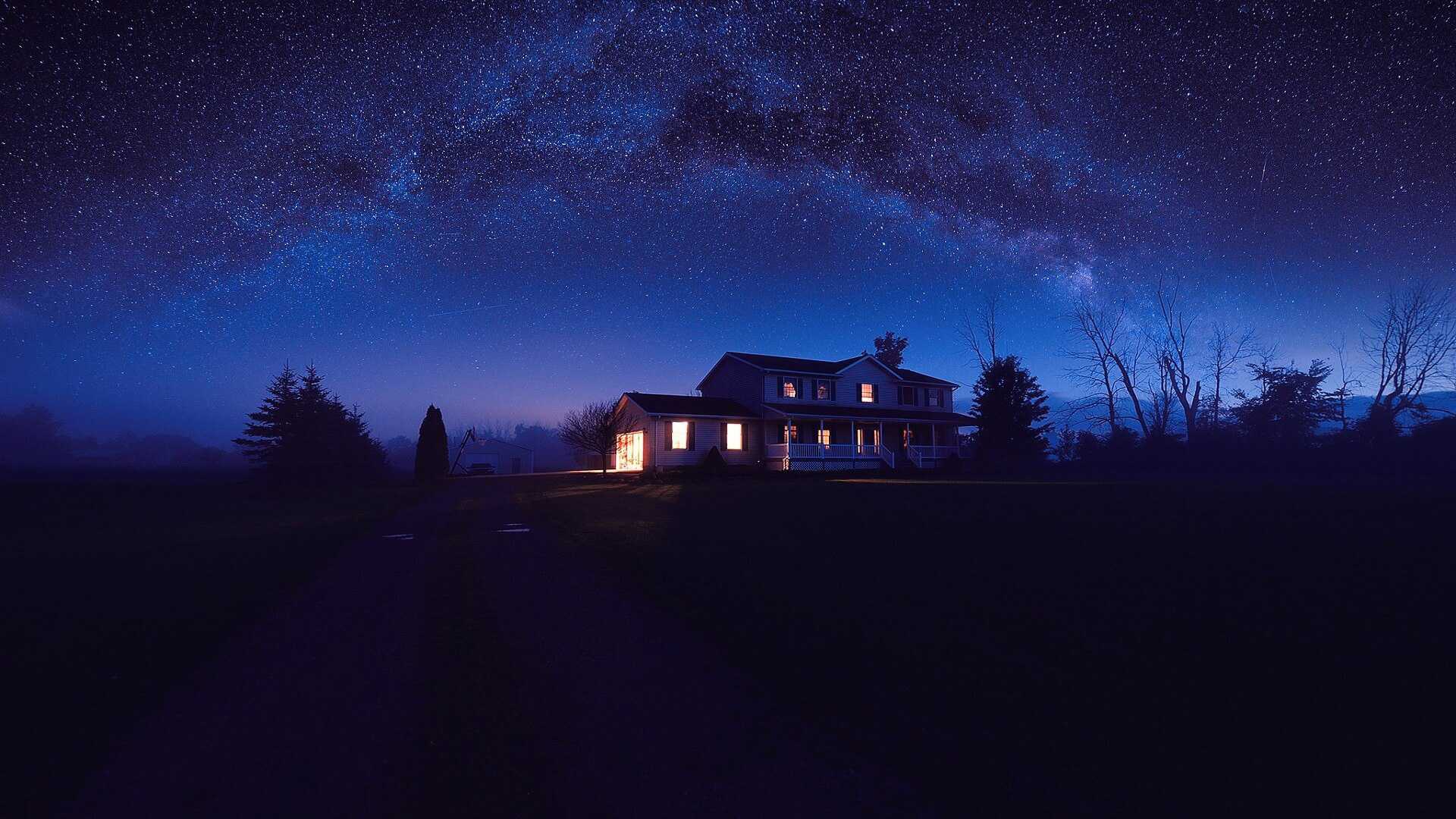
This light that papers over the cracks with a show of peace.
There were none of the usual features of what is ordinarily called a home: no pots, bowls, ladles, or basins, no dishes waiting to be washed, no clothesline for drying laundry, no crying of infants. There was only soft lighting, tasteful decor, elegant flooring, and tall floor-to-ceiling glass windows letting in the night. It was silent here. Wanyun turned off all the lights, drew the curtains, and sat on the floor. She had searched for this home for a long time, because her requirements were too exacting: it had to be at the end of the corridor, not in the middle among the other households; there had to be enough neighbors with indistinct faces around, so that she could be buried among them, indistinguishable to anyone; and of course, outside there had to be room for countless bicycles to park.
In Grandfather’s later years, his coughing was severe. The endpoint of the coughing was a mouthful of thick phlegm; once that phlegm, accompanied by an enormous rasping sound from his throat, had been ejected, Grandfather would begin the next round of coughing, over and over again. Beside the sofa chair in the living room was a window opening onto the house’s corridor; ordinarily this window stood open. Once, someone — who knows who — closed it, but Grandfather mistakenly believed it was still open, and spat an entire mouthful of thick phlegm right onto the bright window glass that was plainly shut. The following summer, Grandfather passed away. And that window, in my heart, clouded over forever, never to be approached.
We are nothing more than the most insignificant layer of darkness, fallen into an infinitely dark abyss. Even if in the end we are swept up and swallowed by the ruthless white light, losing our purest original color, we should still remember our original appearance, remember our warmth, our lives.
The light appears alone in the vast darkness, and then begins to invade this dark world on all sides; wherever it reaches, all is a ghastly white.
All things — far more than mere sacrificial dogs of straw.
Awake to a certain degree, one begins to forget these unending, gorgeous, colorful dreams; and exposed to glaring light for too long, one no longer longs for this boundless, infinitely gentle darkness.
In his early years Grandfather made his living by fishing; in his prime he was a barber; in his later years he drank all day long. A life with nothing much worth recording.